
Brain peptides! Which ones can help the brain?

Neuropeptides for cognition are having a moment. Specifically, there are six neuropeptides that are part of the general discussion: Cerebrolysin, Semax, Selank, Dihexa, P21, and FGL. Three questions determine whether any of these peptides are clinically useful: does it reach the target, has it been documented to produce desired effect once it gets there, and what is the regulatory status.
Some important housekeeping notes: Semax was just preliminarily approved by the PCAC Committee a couple days ago to be added to the 503A bulk list. Dihexa is being considered for addition in the upcoming February 2027 PCAC meeting.
Delivery of therapeutic peptides to the brain is the first hurdle as the blood-brain barrier is a notoriously tough barrier for targeted therapies. Formed by tight junctions between the endothelial cells lining cerebral capillaries, this barrier exists to protect the brain and disallow movement of many large molecules. Passive diffusion through the barrier is only available for lipid soluble molecules under 400–500 Daltons. By that standard, more than 98% of small-molecule drugs and effectively 100% of biologics fail to enter the brain in pharmacologically meaningful amounts. Sometimes molecule modifications can be made to allow for better BBB permeability and permit oral or IV dosage forms.
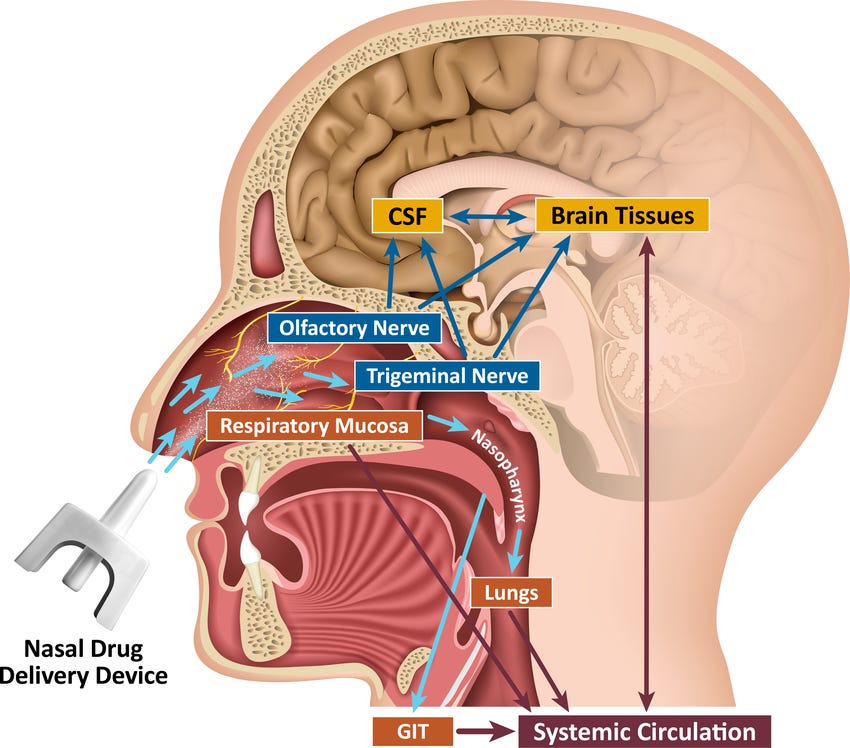
With large peptides that do not have the ability to passively diffuse through the barrier, intranasal dosage forms are used. Intranasal administration allows these larger molecules to have direct access to the central nervous system (CNS) through olfactory neurons and the trigeminal pathway. This delivery system is very useful but if administered incorrectly can be ineffective where the dose droplets are swallowed through the throat. Standard technique can be demonstrated by a physician: tilt head back slightly, exhale, insert applicator into nostril, spray during gentle inhalation, hold breath briefly, repeat in the other nostril. Patients who spray into the lower nasal cavity or inhale too deeply, dose the wrong tissue and get minimal CNS effect.
Cerebrolysin
Summary
A mix of low-molecular-weight peptide fragments and free amino acids derived from porcine brain protein
Administered intravenously (IV) or intramuscularly (IM)
Uses
Acute ischemic stroke and post-stroke rehabilitation
Traumatic brain injury
Vascular dementia
Alzheimer’s disease
Cerebrolysin was first developed in 1949 by Australian professor Gerhart Harrer. In the 1970s researchers in Austria began studying the effects of peptides on the brain.
In animal models of Alzheimer’s disease, Cerebrolysin promoted the growth of new neurons in the hippocampus and increased synapse formation, and modulates the Sonic Hedgehog (Shh) signaling pathway, which is involved in stem cell differentiation and tissue repair.
It was approved for use in the late 1990s and early 2000s in several countries including Austria, Germany, Russia, China, Czech Republic, Slovakia and Ukraine. It is currently approved in 45 different countries - just not the United States. Formal clinical studies began in 1973 and continued throughout the 1980s and 1990s.
Cerebrolysin is a naturally derived therapeutic isolated from porcine brain protein. The preparation contains fragments with neurotrophic activity resembling NGF, BDNF, CNTF, and GDNF, along with enkephalin and orexin fragments. Documented effects include protection against glutamate excitotoxicity and oxidative stress, reduced beta-amyloid deposition, decreased tau hyperphosphorylation, reduced perivascular microgliosis and astrogliosis, and increased GluR1 density in hippocampal formations. It addresses the cellular biology of neurodegeneration across several routes at once rather than targeting a single pathway.
For acute ischemic stroke, the 2023 Cochrane review pooled seven randomized controlled trials totaling 1,773 participants. Moderate-certainty evidence indicated no benefit on all-cause death, no benefit on the total number of patients with serious adverse events, and a potential increase in non-fatal serious adverse events. That is a negative review from the most methodologically conservative body in the field, and it has now been the conclusion across multiple update cycles.
For stroke rehabilitation, the picture is more favorable. The CARS trial randomized patients to 30 mL Cerebrolysin daily for 21 days alongside standardized rehabilitation, and reported a large effect on upper limb motor function at day 90 (Action Research Arm Test; Mann-Whitney estimator 0.71, 95% CI 0.63–0.79, P<0.0001). The authors themselves flagged the study as exploratory and small, requiring confirmation.
For traumatic brain injury (concussions), the CAPTAIN trial series used a multidimensional outcome ensemble analyzed by the Wei-Lachin procedure. CAPTAIN I missed statistical significance on the primary ITT endpoint; the prospective meta-analysis of the series (185 patients) reported benefit at days 30 and 90.
For vascular dementia, the Cochrane review found improvement in cognition and global function with no adverse signal, but concluded the evidence was insufficient to recommend routine use — six trials, 597 participants, most industry-supported, substantial heterogeneity.
Semax
Summary
Based on natural ACTH (adrenocorticotropic hormone)
MW 813.9 g/mol
Heptapeptide; sequence Met-Glu-His-Phe-Pro-Gly-Pro
Uses
Stroke recovery (acute and post-acute phases)
Transient ischemic attack (TIA)
TBI and post-concussion syndrome cognitive symptoms
Memory and cognitive disorders
Anxiety and depression
ADHD-like symptoms in some clinical contexts
Neuroprotection against hypoxia and glutamate excitotoxicity
Optic nerve support
Peptic ulcer disease (peripheral effect)
Cognitive optimization in healthy patients
Semax was developed in Russia in the 1980s as a synthetic analog of ACTH designed for stroke recovery. Throughout the years, it has since accumulated clinical use across cognitive support, anxiolytic applications, and neuroprotection. Russian clinical literature describing Semax exists but is underutilized in Western medicine in large part due to the language barrier and difference in study design.
A notable randomized, double-blind, placebo-controlled stroke trial reported reduced 30-day mortality and improved neurological recovery. Data has also been published to show measurable increases in plasma BDNF alongside Barthel index and motor scale improvement in post-stroke cohorts and chronic cerebrovascular insufficiency.
Mechanistically, the peptide works through neurotrophin upregulation. Additional reported mechanisms include dopaminergic and serotonergic modulation. In rat studies, a single dose of Semax produced up to a 1.4-fold increase in hippocampal BDNF protein, a 1.6-fold increase in TrkB tyrosine phosphorylation, and threefold and twofold increases in exon III BDNF and TrkB mRNA respectively, alongside improved conditioned avoidance performance. In permanent middle cerebral artery occlusion models, Semax activates transcription of neurotrophins and their receptors in cortex, and genome-wide analysis shows effects on immune and vascular system gene expression after focal ischemia.
Just this past week, Semax was just preliminarily approved by the PCAC Committee a couple days ago to be added to the 503A bulk list. That means that there is a very good chance by the end of 2026, or early 2027, Semax will be available to be safely and legally compounded by pharmacies in the United States.
Semax is one of the few neuropeptides that produces noticeable subjective cognitive effects in the short term. Patients often report mental clarity, reduced anxiety, and improved focus within days of beginning intranasal Semax therapy. This rapid feedback distinguishes Semax from compounds where effects emerge over weeks and reinforces patient compliance during the longer-term protocol.
Some of my patients really love Semax.
Selank (or TP-7)
Summary
Synthetic analog of human tuftsin (IgG fragment)
MW = 751.89 g/mol
7 amino acid sequence: Thr-Lys-Pro-Arg-Pro-Gly-Pro
Uses
Generalized anxiety disorder
Depression with anxiety component
Asthenia (chronic fatigue with cognitive component)
Sleep balance regulation (without sedation)
Memory and cognitive function support
Antiviral activity in some clinical contexts
Inflammation regulation
Adjunct in stress-related conditions
Cognitive optimization in healthy patients with anxiety component
Selank is another Russian peptide, in use since the 1990s. It is based on tuftsin, a naturally occurring immune tetrapeptide cleaved from IgG. It has full approval in Russia for use as an intranasal prescription.
The primary clinical study cited compares Selank against medazepam in patients with generalized anxiety disorder and neurasthenia. Selank matched the benzodiazepine in calming anxiety without the sedative effect, dependency, or cognitive impairment associated with benzodiazepines. Its mechanisms include: modulation of interleukin-6; balanced T cell cytokine effects; elevated BDNF in the hippocampus; influence on monoamine neurotransmitters; reduced breakdown of enkephalins; increased inhibitory action of GABA; regulation of BCL6 protein (an important transcriptional regulator of the immune system).
I’ve prescribed Selank many times, and it doesn’t get quite the same positive response that Semax does. Some patients will choose to alternate the two, with a common protocol using Semax (Monday, Wednesday) and Selank (Tuesday, Thursday).
There is a chance that Selank is under consideration to be discussed by the PCAC Committee in February 2027 to be added to the 503A bulk list, along with Dihexa.
Dihexa
[ATH-1017 (Fosgonimeton), and ATH-1105 (Brelgometon)]
Summary
Targets the Hepatocyte Growth Factor (HGF) / c-Met
Different modified dipeptide versions of sequence: Tyr-Ile
Proposed Uses
TBI and post-concussion syndrome
Post-stroke cognitive rehabilitation
Memory disorders
Parkinson’s disease (preclinical motor models)
Age-related cognitive decline
Amyotrophic lateral sclerosis (ALS)
Dihexa was designed in the 2010s at Washington State University as a metabolically stabilized angiotensin IV analog, engineered with a lipophilic modification specifically to cross the blood-brain barrier. Dihexa is a small enough molecule that testing has been performed on oral formulations. Dihexa did not make it past mouse studies as it lacked optimal pharmacokinetic properties for human delivery. The research team redesigned Dihexa using the same theoretical pathway into a differently modified peptide Fosgonimeton/ATH-1017 and now ATH-1105.
ATH-1017 progressed into human trials for Alzheimer’s disease with favorable Phase 1 safety profiles but the program was ultimately scrapped after Phase 3 trials failed to show slowing cognitive decline in the treatment group. ATH-1105 is currently under review with positive results from Phase 1 trials recently published. ATH-1105 is targeting approval for treatment of Amyotrophic lateral sclerosis (ALS). The company commercializing these therapies is M3 Biotechnology/Athira Pharmaceuticals/LeonaBio and they recently were in the news settling a whistleblower claim with the US government over the previous CEO’s past academic research misconduct.
P21
Summary
Based on ciliary neurotrophic factor (CNTF)
MW 578.3 g/mol
Modified peptide with backbone sequence: Asp-Gly-Gly-Leu-Ala-Gly
Proposed Uses
Alzheimer’s disease and related tauopathies
TBI and post-concussion recovery
Age-related cognitive decline
Hippocampal neurogenesis support
P21 came out of a New York based research institute, first published in the 2010s. As a small peptide, the exact formulation is designed for better blood-brain barrier permeability and is dosed orally. The specific mechanism of action is similar to that of Cerebrolysin. Currently P21 has only been published in mouse models. P21 is also referred to as P021, and P21 adamantane in the literature.
FGL
Summary
Based on the neural cell adhesion molecule (NCAM), FG loop region
15 amino acid sequence: EVYVVAENQQGKSKA
Uses
Neuroprotection following ischemic injury
Cognitive support in age-related decline
Neuroinflammation modulation
Synaptic and memory consolidation support
FGL was developed at the University of Copenhagen by Elisabeth Bock and Vladimir Berezin as part of a program mapping functional motifs within NCAM. NCAM mediates neuron-to-neuron adhesion and is central to synaptic plasticity and learning, but the full protein is not druggable. FGL reproduces the single functional motif that binds FGFR1, allowing that pharmacology to be accessed with a short peptide. It roughly doubles FGFR1 phosphorylation, activating downstream Ras-MAPK and PI3K-Akt signaling.
Preclinically, FGL induces neurite outgrowth, promotes synaptogenesis, and enhances presynaptic function. Administered to rats immediately after fear conditioning or water maze training, it produced long-lasting memory improvement. It also carries a distinct anti-inflammatory profile: in aged rats it attenuated microglial activation markers and the IL-1β increase while restoring long-term potentiation, and after middle cerebral artery occlusion it mobilized endogenous neural stem cells and induced remyelination. Phase 1 trials were published with positive human safety results in 2007, though Phase 2 and 3 efficacy data has yet to follow.
Recent Regulatory Updates
In 2023, FDA classified a large group of peptides onto the Category 2 list prohibiting 503A compounding. These affected peptides included Semax, Selank acetate (TP-7), and Dihexa acetate. Earlier this year, all three of these peptides were part of the list of substances that were then removed from the Category 2 classification.
This past week in the meeting of the Pharmacy Compounding Advisory Committee (PCAC) which advises on FDA policies, Semax was recommended to be considered for inclusion on the 503A Bulks List for cerebral ischemia, migraine, and trigeminal neuralgia. Selank and Dihexa were not on the list of molecules considered during the meeting, but will be considered at the upcoming meeting in February 2027.
Resources
Cloyd, James & Haut, Sheryl & Carrazana, Enrique & Rabinowicz, Adrian. (2021). “Overcoming the challenges of developing an intranasal diazepam rescue therapy for the treatment of seizure clusters.” Epilepsia. 2021. 10.1111/epi.16847
Pardridge WM. “The blood-brain barrier: bottleneck in brain drug development.” NeuroRx. 2005;2(1):3–14. https://pubmed.ncbi.nlm.nih.gov/15717053/
Lochhead JJ, Thorne RG. “Intranasal delivery of biologics to the central nervous system.” Adv Drug Deliv Rev. 2012;64(7):614–628. doi:10.1016/j.addr.2011.11.002. https://pubmed.ncbi.nlm.nih.gov/22119441/
Ziganshina LE, Abakumova T, Nurkhametova D, Ivanchenko K. “Cerebrolysin for acute ischaemic stroke.” Cochrane Database Syst Rev. 2023;10:CD007026. doi:10.1002/14651858.CD007026.pub7. https://pubmed.ncbi.nlm.nih.gov/37818733/
Muresanu DF, Heiss WD, Hoemberg V, et al. “Cerebrolysin and Recovery After Stroke (CARS): A Randomized, Placebo-Controlled, Double-Blind, Multicenter Trial.” Stroke. 2016;47(1):151–159. https://pubmed.ncbi.nlm.nih.gov/26564102/
Poon W, Vos P, Muresanu D, et al. “Safety and efficacy of Cerebrolysin in acute brain injury and neurorecovery: CAPTAIN I — a randomized, placebo-controlled, double-blind, Asian-Pacific trial.” Neurol Sci. 2020;41(2):281–293. https://pubmed.ncbi.nlm.nih.gov/31494820/
Vester JC, Buzoianu AD, Florian SI, et al. “Cerebrolysin after moderate to severe traumatic brain injury: prospective meta-analysis of the CAPTAIN trial series.” Neurol Sci. 2021;42(11):4531–4541. https://pubmed.ncbi.nlm.nih.gov/33620612/
Cui S, Chen N, Yang M, et al. “Cerebrolysin for vascular dementia.” Cochrane Database Syst Rev. 2019;11:CD008900. doi:10.1002/14651858.CD008900.pub3. https://pubmed.ncbi.nlm.nih.gov/31710397/
Gauthier S, Proaño JV, Jia J, et al. “Cerebrolysin in mild-to-moderate Alzheimer’s disease: a meta-analysis of randomized controlled clinical trials.” Dement Geriatr Cogn Disord. 2015;39(5-6):332–347. https://pubmed.ncbi.nlm.nih.gov/25831916/
Dolotov OV, Karpenko EA, Inozemtseva LS, et al. “Semax, an analog of ACTH(4-10) with cognitive effects, regulates BDNF and trkB expression in the rat hippocampus.” Brain Res. 2006;1117(1):54–60. doi:10.1016/j.brainres.2006.07.108. https://pubmed.ncbi.nlm.nih.gov/16996037/
Medvedeva EV, Dmitrieva VG, Povarova OV, et al. “Semax and Pro-Gly-Pro activate the transcription of neurotrophins and their receptor genes after cerebral ischemia.” Cell Mol Neurobiol. 2009. https://pubmed.ncbi.nlm.nih.gov/19633950/
Medvedeva EV, Dmitrieva VG, Limborska SA, et al. “The peptide semax affects the expression of genes related to the immune and vascular systems in rat brain focal ischemia: genome-wide transcriptional analysis.” BMC Genomics. 2014;15:228. https://pubmed.ncbi.nlm.nih.gov/24666810/
Skvortsova VI, Stakhovskaia LV, Gubskii LV, et al. “A randomized, double-blind, placebo-controlled trial of Semax in patients with acute ischemic stroke.” Zh Nevrol Psikhiatr Im S S Korsakova. 2004;Suppl 11:62–66. https://pubmed.ncbi.nlm.nih.gov/15554370/
Gusev EI, Skvortsova VI, Chukanova EI, et al. “Semax in prevention of disease progress and development of exacerbations in patients with cerebrovascular insufficiency.” Zh Nevrol Psikhiatr Im S S Korsakova. 2005;105(2):35–40. https://pubmed.ncbi.nlm.nih.gov/15768548/
Zozulia AA, Neznamov GG, Siuniakov TS, et al. “Efficacy and possible mechanisms of action of a new peptide anxiolytic Selank in the therapy of generalized anxiety disorders and neurasthenia.” Zh Nevrol Psikhiatr Im S S Korsakova. 2008;108(4):38–48.
Vasilyeva EV, Kondrakhin EA, Salimov RM, Kovalev GI. “GABA, Selank, and Olanzapine Affect the Expression of Genes Involved in GABAergic Neurotransmission in IMR-32 Cells.” Front Pharmacol. 2017;8:89.
McCoy AT, Benoist CC, Wright JW, et al. “Evaluation of metabolically stabilized angiotensin IV analogs as procognitive/antidementia agents.” J Pharmacol Exp Ther. 2013;344(1):141–154. doi:10.1124/jpet.112.199497. https://pubmed.ncbi.nlm.nih.gov/23055539/
Benoist CC, Kawas LH, Zhu M, et al. “The procognitive and synaptogenic effects of angiotensin IV-derived peptides are dependent on activation of the hepatocyte growth factor/c-Met system.” J Pharmacol Exp Ther. 2014;351(2):390–402.
Wright JW, Harding JW. “The Brain Hepatocyte Growth Factor/c-Met Receptor System: A New Target for the Treatment of Alzheimer’s Disease.” J Alzheimers Dis. 2015;45(4):985–1000. https://pubmed.ncbi.nlm.nih.gov/25649658/
Athira Pharma, Inc. “Athira Pharma Reports Topline Results from Phase 2/3 LIFT-AD Trial of Fosgonimeton.” September 2024. [verify exact release title and date]
LeonaBio, Inc. “Athira Pharma Announces Name Change to LeonaBio, Inc. with New Ticker ‘LONA.’” 9 January 2026.https://investors.leonabio.com/news-releases
LeonaBio, Inc. “LeonaBio Presents on ATH-1105 at 5th Annual ALS Drug Development Summit.” 4 June 2026.https://investors.leonabio.com/news-releases
Ramos N. “Athira Pharma to Pay $4 Million in Settlement Over Research Misconduct Allegations.” OCCRP, 8 January 2025.https://www.occrp.org/en/news/
Kazim SF, Blanchard J, Dai CL, et al. “Disease modifying effect of chronic oral treatment with a neurotrophic peptidergic compound in a triple transgenic mouse model of Alzheimer’s disease.” Neurobiol Dis. 2014;71:110–130. https://pubmed.ncbi.nlm.nih.gov/25046994/
Baazaoui N, Iqbal K. “Prevention of dendritic and synaptic deficits and cognitive impairment with a neurotrophic compound.” Alzheimers Res Ther. 2017;9(1):45. https://www.ncbi.nlm.nih.gov/pmc/articles/PMC5488423/
Kiselyov VV, Skladchikova G, Hinsby AM, et al. “Structural basis for a direct interaction between FGFR1 and NCAM and evidence for a regulatory role of ATP.” Structure. 2003;11:691–701.
Cambon K, Hansen SM, Venero C, et al. “A synthetic neural cell adhesion molecule mimetic peptide promotes synaptogenesis, enhances presynaptic function, and facilitates memory consolidation.” J Neurosci. 2004;24(17):4197–4204.
Anand R, Seiberling M, Kamtchoua T, Pokorny R. “Tolerability, safety and pharmacokinetics of the FGLL peptide, a novel mimetic of neural cell adhesion molecule, following intranasal administration in healthy volunteers.” Clin Pharmacokinet. 2007;46(4):351–358.
Downer EJ, Cowley TR, Lyons A, et al. “A novel anti-inflammatory role of NCAM-derived mimetic peptide, FGL.” Neurobiol Aging. 2010;31(1):118–128.
Klein R, Blaschke S, Neumaier B, et al. “The Neural Cell Adhesion Molecule-Derived (NCAM)-Peptide FG Loop (FGL) Mobilizes Endogenous Neural Stem Cells and Promotes Endogenous Regenerative Capacity after Stroke.” J Neuroimmune Pharmacol. 2016;11(4):708–720.
U.S. Food and Drug Administration. “Certain Bulk Drug Substances for Use in Compounding that May Present Significant Safety Risks.”
https://www.fda.gov/
U.S. Food and Drug Administration. “July 23–24, 2026: Meeting of the Pharmacy Compounding Advisory Committee.”
https://www.fda.gov/
Eglovitch JS. “FDA advisory committee backs two more peptides, rejects one for compounding list.” Regulatory Focus, Regulatory Affairs Professionals Society, 24 July 2026.
https://www.raps.org/